

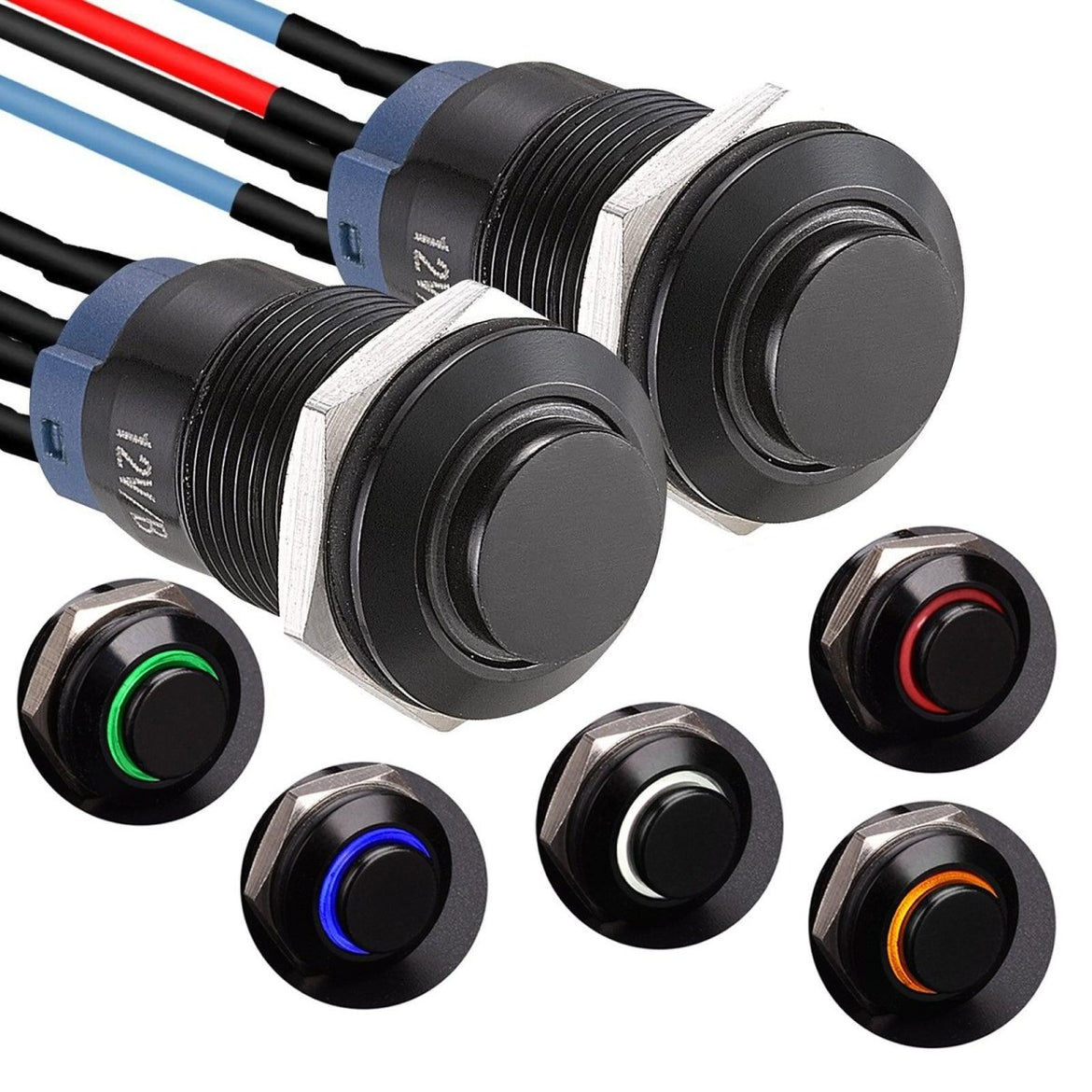

The Best Switch Types for Car Audio Systems: A Definitive Guide to 12V Control
The Best Switch Types for Car Audio Systems: A Definitive Guide to 12V Control
Selecting the appropriate switch types for car audio systems is vital for ideal performance. Various options exist, including momentary and latching switches, each serving specific functions. Understanding their capabilities and applications can enhance user experience and system reliability. Factors such as durability and electrical compatibility further influence choice. Exploring the nuances of each switch type reveals essential insights into effective audio control. What considerations should one keep in mind before making a selection?
Key Takeaways
- Momentary switches provide temporary connections, ideal for features like volume control or toggling between audio sources in car audio systems.
- Latching switches maintain circuit connections, making them perfect for power controls or setting specific audio modes.
- SPST switches are straightforward and effective for basic on/off functions in car audio applications.
- DPDT switches enable multiple circuit paths, suitable for complex audio configurations or switching between different audio sources.
- Ensure switches have adequate amperage ratings and environmental resistance to withstand the automotive conditions and ensure reliable operation.
Mastering Custom Control in High-Performance Car Audio

In high-performance car audio systems, external switching plays a critical role in managing various audio components effectively.
Key selection criteria for 12V systems focus on electrical compatibility, environmental resilience, and ergonomic design.
The APIELE advantage highlights innovative features that enhance user control and system performance, ensuring a superior audio experience.
The Necessity of External Switching
While high-performance car audio systems deliver superior sound quality, the necessity of external switching becomes apparent for effective control and customization. Implementing external switches provides distinct advantages, such as enhanced functionality and user accessibility.
Ideal switch placement strategies can greatly influence user experience, ensuring seamless integration into the vehicle’s interior. Adhering to wiring best practices is essential to maintaining system integrity and preventing faults.
In addition, the durability impacts of switches cannot be overlooked; robust designs are essential for longevity in varying environmental conditions.
Finally, thoughtful user interface design enhances the overall interaction with the audio system, making external switches indispensable for audiophiles seeking mastery in car audio customization.
Core Selection Criteria for 12V Systems
Selecting the right components for 12V systems is essential for mastering custom control in high-performance car audio setups. Core switch functionalities must align with the specific needs of audio systems, ensuring seamless operation.
Voltage compatibility is vital; switches must support the required electrical specifications without risk of failure. Switch durability is another key factor, as components endure frequent use and require materials that withstand wear.
Environmental resistance cannot be overlooked; switches must be designed to endure moisture, temperature fluctuations, and vibrations commonly encountered in automotive environments.
The APIELE Advantage
The APIELE advantage lies in its ability to provide unparalleled control for high-performance car audio systems.
By utilizing premium switch materials, APIELE switches guarantee durability and reliability under demanding conditions. Their ergonomic design enhances user accessibility, allowing for intuitive operation while driving.
Compliance with rigorous safety standards assures protection against electrical faults and overloads, safeguarding both the vehicle and its occupants.
Additionally, APIELE switches exhibit exceptional environmental resistance, effectively withstanding moisture, temperature fluctuations, and vibrations typical in automotive applications.
This combination of features positions APIELE as a leader in custom control solutions for car audio systems, enabling enthusiasts to achieve maximum performance while enjoying the convenience and safety that advanced switching technology provides.
The Electrical Foundation: Action, Poles, and Power Handling

In the domain of automotive switches, understanding the distinctions between momentary and latching action is vital for effective circuit control.
Additionally, the configuration of contacts, such as SPST and DPDT, alongside appropriate amperage ratings, plays a significant role in ensuring compatibility with the audio system’s load requirements.
This foundational knowledge is essential for optimizing performance and reliability in car audio applications.
Defining Switch Action: Momentary vs. Latching
Understanding switch action is crucial for optimizing automotive systems, particularly when distinguishing between momentary and latching switches. Momentary switches facilitate temporary circuit connections, activating electrical components only while engaged by the user.
Conversely, latching switches maintain their circuit connection until deliberately toggled again, allowing for persistent functionality.
Key characteristics include:
-
Momentary switches: Ideal for short-duration user interaction.
-
Latching switches: Suitable for functions requiring ongoing power.
-
Switch functionality: Impacts overall system design and user experience.
-
User interaction: Determines the effectiveness of each switch type in specific applications.
-
Circuit connection: Essential for ensuring reliability and performance in automotive environments.
Understanding these distinctions aids in selecting the appropriate switch type for car audio systems, enhancing overall performance.
Understanding Contact Configurations (SPST, DPDT)
Contact configurations, such as Single Pole Single Throw (SPST) and Double Pole Double Throw (DPDT), play a pivotal role in automotive switch functionality and circuit design. SPST switches offer advantages like simplicity and ease of installation, making them ideal for straightforward applications. Conversely, DPDT switches are versatile, allowing for multiple circuit paths and are suitable for complex configurations.
| Configuration | Description | Applications |
|---|---|---|
| SPST | Single circuit connection | Basic lighting control |
| DPDT | Dual circuit connection | Motor direction control |
| Wiring | Considerations for installation | Gauge and polarity matching |
Understanding these contact types is essential for peak performance and reliable operation in automotive audio systems, ensuring correct wiring considerations are met.
Amperage Ratings and Load Matching
When selecting automotive switches for audio systems, amperage ratings and load matching are critical factors that determine performance and safety. Properly matched components guarantee efficient operation and prevent potential failures.
Key considerations include:
-
Amperage Ratings: Confirm switches can handle the current without overheating.
-
Load Matching: Match the switch ratings to the load requirements of audio components.
-
Circuit Protection: Incorporate fuses or circuit breakers to safeguard against overloads.
-
Switch Durability: Choose high-quality materials to withstand frequent use and environmental stresses.
-
Voltage Compatibility: Verify that the switch operates effectively within the vehicle’s electrical system voltage.
Type 1: Precision Control with Metal Push Button Switches

Metal push button switches offer enhanced durability and precision control, making them ideal for automotive audio systems.
Their robust construction allows for reliable performance in demanding environments, while their application extends to various audio control functions.
Additionally, these switches can incorporate illumination features and customization options, providing both aesthetic appeal and functional versatility.
The Metal Advantage
Precision control is a hallmark of metal push button switches, making them a favored choice in automotive applications. These switches leverage various metal types to deliver enhanced performance and reliability.
Their advantages include:
-
Corrosion Resistance: Metal push buttons are often coated or made from alloys that withstand environmental degradation.
-
Conductivity Benefits: Metals provide superior electrical conductivity, minimizing resistance and power loss.
-
Weight Considerations: While typically heavier than plastic alternatives, the density of metals often contributes to a solid feel and longevity.
-
Aesthetic Appeal: The sleek, polished finish of metal enhances the interior design of vehicles.
-
Durability: Metal switches endure harsh conditions, providing longevity and consistent performance in demanding environments.
These features make metal push button switches an excellent choice for car audio systems.
Application Deep Dive: Push Buttons in Audio Control
A notable option for audio control in automotive applications is the use of metal push button switches, which offer exceptional precision and reliability. These momentary switches are integral in user interface design, providing tactile feedback features that enhance the interaction experience. Their durability is vital, as they undergo rigorous switch durability testing to guarantee long-lasting performance under varying conditions.
| Feature | Description |
|---|---|
| Push Button Applications | Ideal for quick audio adjustments |
| Momentary Switches | Engaged only during the press |
| Tactile Feedback | Provides physical response to user interaction |
| User Interface Design | Enhances usability and ergonomics |
| Switch Durability Testing | Guarantees reliability in demanding environments |
Illumination and Customization: Beyond Simple Light
In automotive applications, the incorporation of metal push button switches extends beyond basic functionality to offer enhanced illumination and customization options.
These switches facilitate superior aesthetic enhancements, making them ideal for car audio systems where visual appeal is paramount.
Key features include:
-
Illumination options that improve visibility in low-light conditions
-
Custom lighting to match the vehicle’s interior design
-
Switch backlighting for intuitive operation
-
LED indicators that provide real-time status feedback
-
Durable construction to withstand environmental stressors
Robust Power Management with Rocker and Toggle Switches
Rocker and toggle switches are essential components for managing high current demands in automotive audio systems.
Their design enables complex switching applications, including multi-position configurations, facilitating intricate control over various functions.
Additionally, integrated switch panels enhance system management, providing a streamlined interface for users to operate multiple components efficiently.
When High Current Calls: The Rocker and Toggle Advantage
High-current applications in automotive systems necessitate switches that can handle the demands of robust power management. Rocker and toggle switches are preferred for their superior performance in high current durability and user interaction ease.
These switches offer distinct advantages that enhance automotive applications, particularly in audio systems.
-
Rocker switch advantages: Simple operation, suitable for frequent use.
-
Toggle switch benefits: Clear on/off indication, reliable mechanical action.
-
High current durability: Capable of managing large electrical loads.
-
User interaction ease: Ergonomic design promotes intuitive control.
-
Environmental resilience: Built to withstand moisture, temperature fluctuations, and vibrations.
Incorporating these switches guarantees reliable performance and longevity, vital for sustained automotive function.
Complex Switching Applications (Multi-Position)
The demand for robust power management in automotive audio systems often leads to the implementation of multi-position switches, particularly rocker and toggle types. These multi-position switches facilitate complex signal routing, allowing users to control multiple audio components with a single interface.
By enabling different circuit configurations, they enhance control versatility and simplify the user experience. The inherent circuit complexity of audio systems necessitates such flexibility, as it accommodates various functionalities without overwhelming the user.
Additionally, application flexibility is a key advantage, enabling seamless integration with custom audio setups. Consequently, rocker and toggle multi-position switches emerge as indispensable tools for enthusiasts seeking to optimize their automotive audio systems while maintaining operational efficiency and reliability.
Integrated System Control: Switch Panels
When integrating complex audio systems in vehicles, switch panels equipped with rocker and toggle switches provide an efficient solution for robust power management. These panels enhance integrated control through effective switch ergonomics, ensuring that users can operate multiple functions seamlessly.
Key features of these switch panels include:
-
Optimized panel layout for intuitive access
-
Diverse customization options for personal preferences
-
Superior wiring techniques that promote reliability
-
Durable materials designed for automotive environments
-
Enhanced safety features to prevent electrical issues
Utilizing rocker and toggle switches within switch panels not only streamlines operation but also elevates the overall functionality of car audio systems, making them essential components for enthusiasts seeking mastery in their audio setups.
Durability and Environmental Protection in the Vehicle
In the automotive environment, switches must withstand extreme conditions, including temperature fluctuations, moisture, and vibrations.
The effectiveness of these components is often measured by their Ingress Protection (IP) ratings, which indicate their resistance to dust and water.
Additionally, selecting high-quality materials is essential for ensuring longevity and performance under rigorous operational demands.
Navigating the Automotive Environment
How do automotive switches maintain functionality in challenging environments? Automotive switches are designed with exceptional switch durability and environmental resistance to thrive in dynamic vehicle conditions.
Key features include:
-
High-quality materials that withstand moisture, temperature fluctuations, and vibrations.
-
User accessibility that promotes ergonomic designs, allowing for easy operation even in restrictive spaces.
-
Robust installation techniques to guarantee stability against shocks and dislodgment.
-
Waterproof and dustproof capabilities that prevent interference from contaminants.
-
Overload protection to guard against electrical faults, enhancing overall safety.
These elements collectively guarantee that automotive switches not only perform reliably but also enhance user experience, vital for the demanding automotive environment.
The Crucial Role of IP Ratings (Ingress Protection)
A critical aspect of automotive switch functionality is the Ingress Protection (IP) rating, which quantifies the degree of protection these components offer against environmental factors such as dust and moisture.
Understanding IP ratings involves recognizing the two-digit code that reflects the level of sealing effectiveness. The importance of sealing cannot be overstated; it guarantees switches remain operational in adverse conditions.
Evaluating environmental factors, such as exposure to water and particulates, is essential when selecting the appropriate switch. Choosing IP ratings that align with the intended application safeguards against failure, enhancing reliability and longevity.
Adhering to Ingress Protection standards is paramount for automotive switches, guaranteeing they can withstand the rigors of the automotive environment.
Material Selection for Longevity
Durability is a paramount factor when selecting materials for automotive switches, as these components must endure the rigors of daily use and harsh environmental conditions.
The right material enhances not only the switch’s lifespan but also its performance.
Key attributes to take into account include:
-
Material Durability: Guarantees prolonged functional life under stress.
-
Corrosion Resistance: Protects against moisture and chemical exposure.
-
Heat Tolerance: Maintains functionality in high-temperature environments.
-
Impact Strength: Resists damage from physical shocks and vibrations.
-
Environmental Stability: Withstands fluctuations in temperature, humidity, and other environmental factors.
Specialized Control: Function Switches for Advanced Audio Systems
In advanced audio systems, specialized control switches enhance functionality and user experience.
Key switches facilitate security and master control, while selector switches manage different modes and input sources.
Additionally, dimming switches provide aesthetic adjustments, and emergency stop switches guarantee safety in high-power applications.
Key Switches for Security and Master Control
Numerous key switches play a crucial role in enhancing security and master control within advanced car audio systems. These switches offer significant key switch benefits, integrating seamlessly with security system integration to fortify vehicle protection.
Employing master control techniques, they facilitate centralized management of audio functions while incorporating essential user accessibility features. Key considerations in their application include:
-
Enhanced security measures against unauthorized access
-
Streamlined control for multiple audio components
-
Switch failure prevention through robust design
-
User-friendly interface for ease of operation
-
Compatibility with various audio systems and configurations
Selector Switches for Mode and Input Management
Selector switches serve as critical components for mode and input management in advanced car audio systems. They offer significant selector switch advantages, such as streamlined audio system compatibility and enhanced user interface design.
By implementing effective input management strategies, these switches allow users to seamlessly shift between various audio sources, guaranteeing peak performance.
Installation best practices dictate that careful attention must be given to wiring, polarity, and mounting techniques to maximize reliability and functionality.
Additionally, selecting the appropriate selector switch guarantees that the audio system operates within its design parameters, minimizing potential conflicts and enhancing overall user experience.
Consequently, mastering selector switches is essential for achieving superior audio control in automotive environments.
Dimming and Aesthetic Control
Dimming and aesthetic control play a crucial role in enhancing the user experience of advanced car audio systems. Effective implementation of these controls not only improves functionality but also elevates the overall ambiance of the vehicle’s interior.
Key considerations include:
-
Dimming options for ideal visibility during nighttime use.
-
Aesthetic enhancements that complement the vehicle’s design.
-
LED indicators for intuitive feedback on switch status.
-
Switch placement that guarantees accessibility and ergonomic comfort.
-
User experience improvement through personalized lighting settings.
Emergency Stops in High-Power Systems
Effective aesthetic control in car audio systems leads to the necessity for robust emergency stop mechanisms, particularly in high-power environments.
Implementing extensive emergency protocols is essential for maintaining circuit integrity and ensuring user safety. High-power audio systems demand safety mechanisms that can quickly interrupt power to prevent damage or hazards.
Fail safe systems should be integrated to facilitate immediate shutdowns without risking system failures or compromising circuit integrity. Additionally, these switches must prioritize user accessibility, allowing for swift activation in emergencies.
Installation Mastery: Choosing the Right Component
In the domain of car audio systems, selecting the appropriate components is critical for ideal installation. This involves accurately calculating and matching electrical requirements, considering pre-wired solutions for efficiency, and ensuring proper mounting and panel preparation.
Additionally, the inclusion of necessary accessories can enhance the overall installation process, contributing to a reliable and effective audio system.
Calculating and Matching Requirements
Calculating and matching requirements is essential for selecting the appropriate automotive switch for a car audio system. This process guarantees peak performance and safety.
Key considerations include:
-
Calculating load requirements to determine the necessary current capacity.
-
Matching switch ratings with the expected load to prevent failures.
-
Assessing voltage compatibility to guarantee the switch operates within the system’s specifications.
-
Evaluating wire gauge to support the current without overheating.
-
Determining circuit protection measures to safeguard against overloads and short circuits.
Pre-Wired Solutions and Efficiency
Numerous car audio enthusiasts recognize the value of pre-wired solutions, which streamline the installation process and enhance efficiency.
The pre-wired advantages include reduced installation time and fewer errors, leading to significant efficiency gains. These solutions offer installation simplicity, allowing users to connect components with minimal wiring effort.
In addition, pre-wired options often come with various customization options, enabling tailored setups that meet individual preferences. This flexibility does not compromise functionality but instead enhances overall performance.
Additionally, many pre-wired solutions are cost-effective, providing reliable performance without breaking the bank.
Mounting and Panel Preparation
Pre-wired solutions simplify the installation process, but proper mounting and panel preparation are essential for achieving peak performance in car audio systems.
Utilizing effective mounting techniques guarantees that switches remain secure and functional despite vehicle vibrations. Selecting appropriate panel materials enhances durability, while also improving aesthetic integration within the vehicle’s interior.
Considerations for switch accessibility must also be prioritized to guarantee user-friendly operation. Key factors include:
-
Mounting Techniques: Employ methods that prevent dislodging.
-
Panel Materials: Choose materials that resist wear and tear.
-
Switch Accessibility: Ensure easy reach for driver convenience.
-
Vibration Resistance: Select switches designed to withstand movement.
-
Aesthetic Integration: Align switch design with vehicle style for a cohesive look.
These elements are critical for ideal functionality and longevity in car audio systems.
Accessories for Complete Installation
A successful car audio installation requires a selection of essential accessories that enhance functionality and guarantee seamless integration. Key components include wiring accessories for ideal signal routing, installation tools for precision, and options for customization to meet specific user needs. Ensuring accessory compatibility is paramount for the system’s overall performance.
| Accessory Type | Purpose | Recommended Brands |
|---|---|---|
| Wiring Harness | Connects head unit to speakers | Metra, Scosche |
| Signal Processors | Enhances audio quality | AudioControl, JL Audio |
| Fuse Holders | Protects circuits | Littelfuse, Bussmann |
| Connector Kits | Facilitates connections | Axxess, Connects2 |
Selecting the right accessories not only streamlines installation but also maximizes the audio system’s capabilities.
Frequently Asked Questions
What Is the Voltage Rating for Typical Car Audio Switches?
Typical voltage ratings for car audio switches range from 12V to 16V, aligning with standard automotive applications.
These voltage ratings guarantee compatibility with vehicle electrical systems and meet essential switch specifications.
Adherence to electrical standards is critical, as it assures reliable circuit compatibility and minimizes risks of failure.
Selecting switches within this voltage range is essential for peak performance in automotive environments, where durability and efficient operation are paramount.
Can I Use Home Switches in My Car Audio System?
Using home switches in a car audio system is akin to placing a delicate flower in a storm; they lack the necessary durability and specifications.
Home switch compatibility is often compromised due to automotive switch requirements like moisture resistance and voltage ratings. Performance factors such as installation considerations and environmental resilience further diminish their effectiveness.
Alternative switch types, designed specifically for automotive applications, provide a more reliable solution, ensuring peak functionality and safety in a vehicle’s demanding environment.
How Do I Troubleshoot a Faulty Switch in My Audio System?
To troubleshoot a faulty switch in an audio system, employ switch testing techniques such as continuity checks.
Common switch issues may include corrosion or broken contacts, which can be identified through visual inspection.
Identifying wiring problems involves checking connections and ensuring proper polarity.
If replacement is necessary, select high-quality switches compatible with the system.
Finally, maintaining audio components through regular inspections can prevent future switch failures, ensuring peak performance.
Are There Wireless Switch Options for Car Audio Systems?
Wireless switch options for car audio systems have become increasingly sophisticated, employing wireless switch technology to enhance user experience.
Bluetooth audio controls allow seamless connectivity, while remote control systems provide convenience from afar.
Additionally, voice-activated switches enable hands-free operation, integrating smoothly with smart home systems.
This innovative approach not only simplifies access but also elevates the overall functionality of automotive audio settings, ensuring that users can tailor their listening experience effortlessly.
What Are the Best Materials for Outdoor Audio Switch Durability?
The best materials for outdoor audio switches prioritize weather resistance, incorporating corrosion resistant coatings and UV protection features to enhance longevity.
Additionally, switches should be constructed from robust materials that meet high impact resistance ratings, ensuring they can withstand physical stress.
Adhering to environmental durability standards is essential for maintaining functionality in varying conditions.
Selecting switches that combine these attributes guarantees reliable performance and durability in outdoor audio applications.
Conclusion
In the intricate symphony of car audio systems, selecting the right switches is akin to choosing the finest instruments for an orchestra. Each switch type, from momentary to latching, plays an essential role in harmonizing performance and durability. By understanding the nuances of electrical compatibility and ergonomic design, enthusiasts can guarantee their audio experience resonates with clarity and longevity. Ultimately, the right components will transform a simple ride into a melodious journey, where every note is effortlessly controlled.