


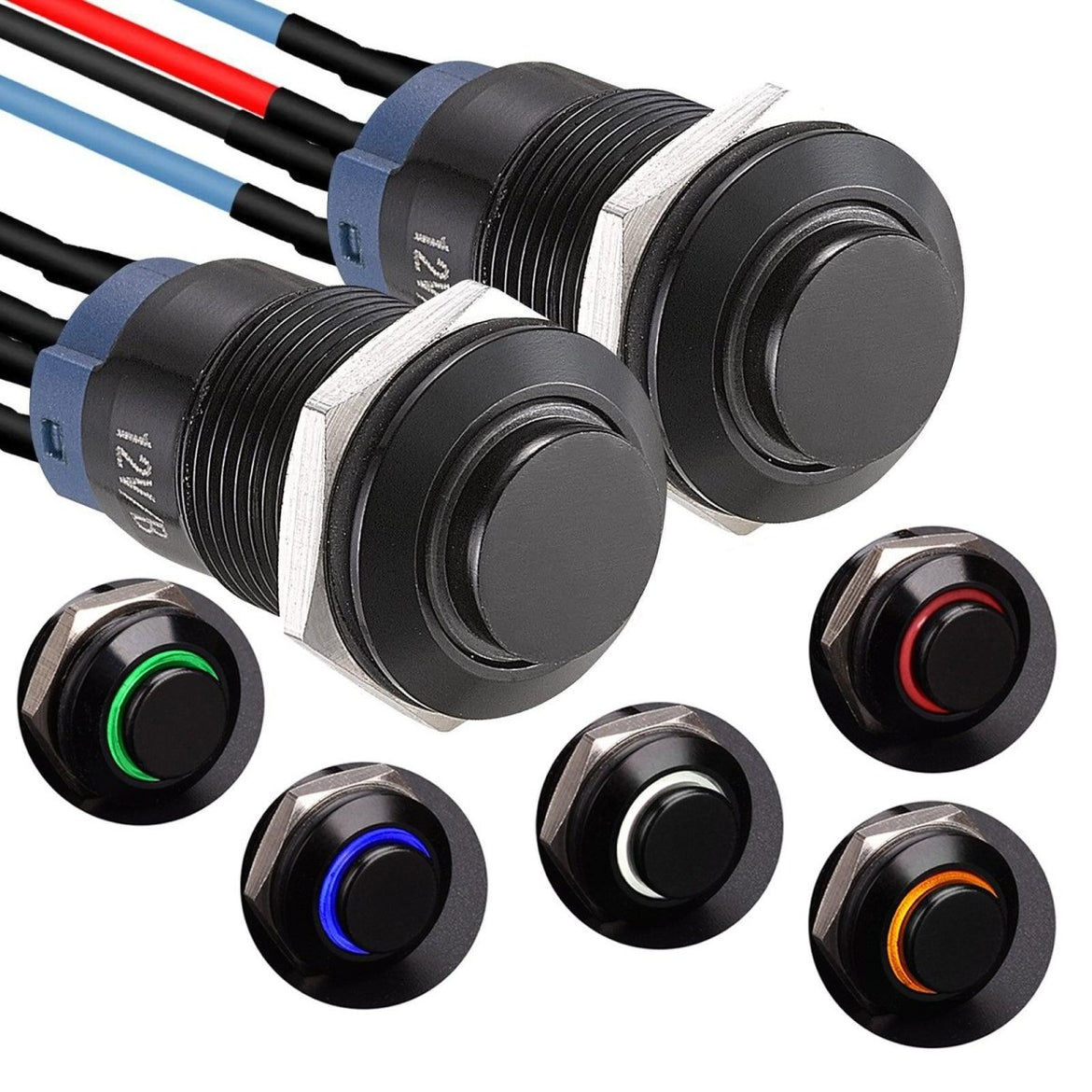
What Is a Push Button Switch ?
What Is a Push Button Switch?
A push button switch is an essential electrical component used to control circuits by offering a straightforward user interface for starting or stopping operations. It operates through mechanical pressure on an actuator, engaging an internal mechanism to open or close the circuit. Key components include various actuator types and contact materials designed for durability. Different types cater to diverse applications, including momentary and latching circuits. Further exploration reveals detailed insights into their functionality and selection considerations.
Key Takeaways
- A push button switch is a user interface device that controls electrical circuits by opening or closing them through mechanical pressure.
- It features a spring-loaded mechanism that ensures reliable actuation and reduces accidental activation for enhanced electrical safety.
- Various types include latching, illuminated, and selector switches, catering to different functional requirements and environments.
- Key components involve actuators, contact materials, and mounting options, all vital for performance and durability.
- Common issues arise from wiring problems and mechanical wear, necessitating regular maintenance and troubleshooting for reliable operation.
What Is a Push Button Switch?

A push button switch is a crucial component in electronic systems, serving as a simple interface for users to control electrical circuits. Tracing its push button history reveals a transition from mechanical designs to modern electronic applications, enhancing user interface efficiency. The switch design typically employs a mechanical latch or spring mechanism, ensuring reliable actuation and maintaining state post-activation. This functionality is paramount for applications requiring high electrical safety, as it mitigates accidental activation. Mechanical durability is also a key consideration, ensuring the switch withstands repeated use in various environments. Overall, push button switches exemplify the intersection of functionality and user-centric design, making them indispensable in both consumer electronics and industrial machinery.
How Does a Push Button Switch Work?

Push button switches operate on the principle of mechanical pressure applied to an actuator, which triggers an internal mechanism to either open or close an electrical circuit. The push button mechanics involve a spring-loaded system that responds to user input, facilitating seamless electrical circuit integration. Upon actuation, contacts either connect or disconnect, altering the state of the circuit. This process is essential in user interface design, providing tactile feedback that enhances user interaction. Additionally, switch durability factors, such as material selection and mechanical design, influence operational lifespan and reliability. Compliance with safety standards ensures these switches perform effectively in various applications, minimizing risks associated with electrical failures and enhancing overall system integrity.
Main Components of a Push Button Switch

Understanding how a push button switch operates highlights the importance of its main components, which collectively facilitate its functionality. The switch design incorporates various actuator types, such as momentary or latching mechanisms, which determine the operational state. Contact materials, typically selected for their conductivity and durability, play a crucial role in ensuring reliable circuit engagement. Mounting options vary widely, accommodating different installation environments and user interfaces. Additionally, safety features, including protective casings and emergency stop functions, enhance operational security and minimize risks. Together, these components create a robust and efficient device, meeting the demands of diverse applications while providing intuitive user interaction and long-lasting performance.
Types of Push Button Switches
Various types of push button switches exist, each designed to fulfill specific operational requirements and user interactions. Latching mechanisms are integral to push-push switches, allowing toggling between on and off states with each press. Illuminated buttons enhance visibility, making them ideal for low-light environments. Selector switches enable users to choose between multiple functions or modes, essential in complex machinery. Emergency applications necessitate robust designs, ensuring immediate power cut-off in critical situations. Additionally, custom designs can be crafted to meet unique specifications, accommodating various industry standards. Each type serves distinct roles, enabling effective control and safety across a wide range of applications, from consumer electronics to industrial equipment.
Momentary vs. Latching Push Button Switches
While both momentary and latching push button switches serve critical roles in electronic control, they operate fundamentally differently. Momentary switches rely on temporary activation, where the circuit remains engaged only during the press, making them suitable for applications requiring brief interactions. In contrast, latching push button switches utilize latching mechanisms that maintain an on or off state after the initial activation, enhancing user interface efficiency. The choice between these types often hinges on specific electrical specifications and design versatility, with momentary functionality ideal for reset operations and latching switches preferable for toggle applications. Understanding these distinctions is essential for selecting the appropriate switch type to meet operational requirements in various electronic systems.
Push Button Switches vs. Tactile Switches
Push button switches and tactile switches serve distinct roles in electronic control systems, each with unique operational characteristics. Push button switches often prioritize switch durability and application versatility, suitable for a wide range of environments. They typically provide tactile feedback that enhances user experience by confirming actuation. In contrast, tactile switches are designed with a focus on compactness and design aesthetics, often utilized in devices where space is limited. While tactile switches may offer less durability in heavy-duty applications, they excel in delivering a satisfying tactile response. Both types of switches contribute to functionality, but the choice between them hinges on specific requirements such as environmental conditions, user interaction, and desired design elements.
Key Features to Consider When Choosing a Push Button Switch
Selecting a push button switch requires careful consideration of several key features that directly impact functionality and performance. Design considerations include actuator shape and size, which influence user interface efficiency. Durability factors, such as mechanical life expectancy and material resilience, are crucial for ensuring longevity in demanding environments. Environmental ratings, particularly ingress protection (IP) classifications, determine suitability for specific applications, especially in harsh conditions. Additionally, mounting options should align with the intended installation environment, whether panel-mounted or PCB-mounted. Each of these elements plays a vital role in selecting an optimal push button switch, ensuring that the final choice meets both operational requirements and user expectations.
Common Applications of Push Button Switches
Numerous industries leverage push button switches for a wide range of applications due to their reliability and ease of use. In industrial automation, these switches serve as critical components in user interfaces, facilitating seamless interaction between operators and machinery. Their integration into safety mechanisms enhances operational security by enabling immediate shutdown features. Design customization allows for tailored solutions that meet specific electrical specifications, accommodating varying voltage and current requirements. Additionally, push button switches find utility in consumer electronics, medical devices, and military applications, where precise control is paramount. The versatility of these switches contributes to their prevalence across sectors, underscoring their importance in both functional and safety-oriented contexts.
How to Choose the Right Push Button Switch for Your Project
The reliability and versatility of push button switches make them integral to various applications across multiple industries. When selecting the appropriate switch, several design considerations must be addressed. First, assess the power ratings to ensure compatibility with the application’s electrical requirements. Switch durability is paramount; opt for models rated for high actuation cycles in demanding environments. The user interface should facilitate intuitive operation, as this impacts user experience significantly. Additionally, installation tips should be followed to ensure proper function and longevity; this includes securing the switch against vibrations and environmental factors. By meticulously evaluating these parameters, one can select a push button switch that meets the specific needs of their project, ensuring optimal performance and reliability.
Common Problems and Troubleshooting Tips
Common issues encountered with push button switches can significantly impact their performance and reliability. Push button failures often stem from wiring issues, including poor connections, frayed wires, or incorrect configurations. Effective troubleshooting techniques involve systematically testing continuity and inspecting for signs of mechanical wear or damage. Maintenance tips include regular cleaning of the switch and ensuring proper grounding to minimize electrical interference. When failures are persistent, replacement options should be considered, selecting components that match the required specifications and load ratings. Additionally, implementing circuit protection measures can mitigate future issues, enhancing the overall durability and functionality of the switch in its application.
Frequently Asked Questions
Can Push Button Switches Be Used Outdoors?
Push button switches can be used outdoors if they possess weather resistance features. Proper outdoor installation, regular maintenance, and adherence to safety considerations ensure durability, enhancing performance in varying environmental conditions while minimizing operational risks.
How Long Do Push Button Switches Typically Last?
Push button switches typically have an operational lifespan ranging from 1,000 to 10,000 cycles. Performance factors, environmental impact, and maintenance tips influence longevity, while specific replacement indicators can signal when switches require servicing or replacement.
Are Push Button Switches Waterproof?
Push button switches can be waterproof, depending on their design variations and waterproof ratings. Proper installation and maintenance practices enhance durability, ensuring effective switch activation even in wet environments. Select appropriate models for specific applications.
Can I Use Push Button Switches in High Voltage Applications?
Push button switches can be used in high voltage applications if they meet appropriate switch ratings. Adhering to installation guidelines, ensuring circuit compatibility, and following maintenance tips are essential for high voltage safety and reliability.
What Materials Are Push Button Switches Made From?
Push button switches typically consist of plastic housings, metal contacts, and rubber or silicone actuators. Various button types and switch mechanisms influence electrical ratings, while installation tips and safety features enhance performance and reliability in diverse applications.