


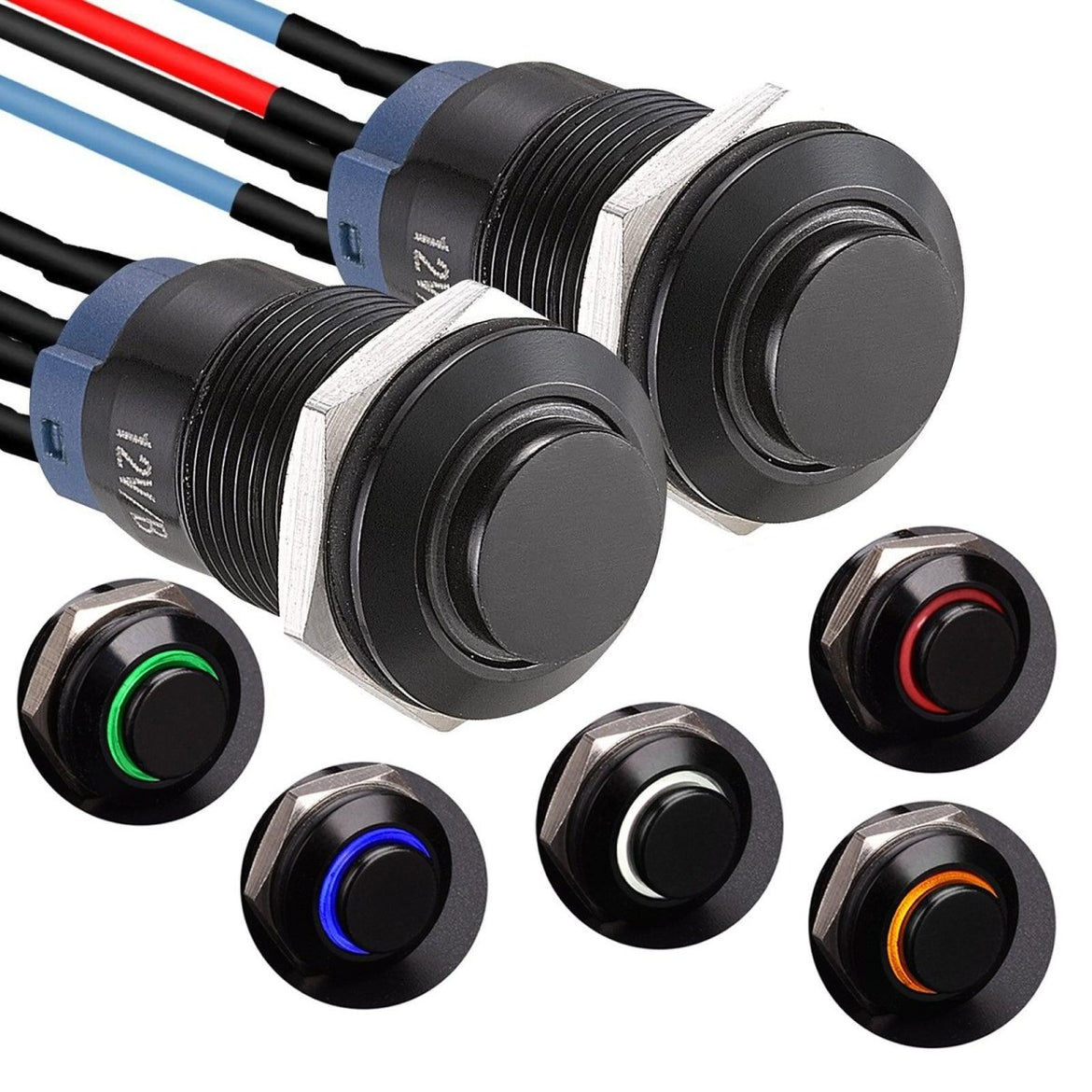
Types of Push Button Switches
Types of Push Button Switches
Push button switches are classified based on functionality, operating behavior, contact configuration, actuator design, and mounting methods. They include momentary or maintained types, with normally open (NO) and normally closed (NC) configurations. Actuator designs vary from mushroom head to tactile, each serving specific applications. Mounting methods encompass panel, surface, and through-hole options. Understanding these types allows for informed choices in electronic systems. Further exploration will reveal more about their applications and unique features.
Key Takeaways
- Push button switches are classified as momentary, which operate only while pressed, or maintained, which stay in their last position until manually reset.
- Contact configurations include Normally Open (NO) for circuit completion upon activation and Normally Closed (NC) for interrupting current flow when pressed.
- Actuator designs range from standard push buttons to specialized types like mushroom head, flush, extended, tactile, and keyed switches, each serving different user needs.
- Common mounting methods are panel mount for durability, surface mount for ease of installation, and through-hole mount for secure fit.
- Regular maintenance, including cleaning and inspections, is crucial for ensuring the longevity and reliability of push button switches.
Classification of Push Button Switches: How They Are Categorized

Push button switches are essential components in various electronic and electrical systems, categorized based on their design, functionality, and operational mechanisms. Their history reveals significant advancements, from rudimentary mechanisms to modern designs incorporating innovative materials and technology. Classification typically hinges on switch functionality, encompassing momentary and maintained operations, which dictate user interactions. Design innovations have led to enhanced safety features, such as sealed enclosures and fail-safe operations, reducing the risk of accidental activation. Furthermore, user accessibility is a critical factor, as ergonomic designs and tactile feedback ensure effectiveness across diverse user demographics. Understanding these classifications allows engineers and designers to select appropriate push button switches that align with specific application requirements and enhance overall system performance.
Types of Push Button Switches by Operating Behavior

The operating behavior of push button switches can be classified into two primary types: momentary and latching (maintained) switches. Momentary push button switches operate only while the button is pressed, returning to their default state when released. In contrast, latching switches maintain their position until manually reset, providing a stable output after activation.
Momentary Push Button Switches
Momentary push button switches are integral components in various electronic systems, designed to provide temporary electrical connections. Commonly employed in momentary circuit designs, these switches initiate actions only while engaged, making them essential for diverse push button applications. Their user interface integration is critical, as they often serve as the primary means for user interaction. Tactile feedback mechanisms enhance the user experience by providing physical responses that confirm activation, thereby improving operational reliability. Additionally, safety switch considerations are paramount, especially in applications where unintentional activation could pose risks. This functionality necessitates careful selection and design to ensure that momentary switches meet both performance and safety standards in complex electronic environments.
Latching (Maintained) Push Button Switches
Although often overshadowed by momentary switches, latching (maintained) push button switches serve a distinct purpose in electronic circuitry by providing a permanent electrical connection until intentionally disengaged. The latching mechanism benefits include energy efficiency, as the switch maintains its state without continuous power. Common latching switch applications encompass lighting control, industrial machinery, and consumer electronics, where consistent operation is crucial. In contrast to momentary switches, which require constant pressure to function, latching switches enhance user convenience through their toggle functionality. Additionally, latching switch durability is often superior, given their robust design, which withstands repeated use. Overall, latching switch design optimizes both performance and reliability, making these switches integral in various electronic systems.
Types of Push Button Switches by Contact Configuration

The classification of push button switches by contact configuration is essential for understanding their operational capabilities. This category includes Normally Open (NO) switches, which complete a circuit when activated; Normally Closed (NC) switches, which interrupt a circuit upon activation; and Changeover switches, such as Single Pole Double Throw (SPDT) and Double Pole Double Throw (DPDT) configurations, which allow for versatile circuit management. Each configuration serves distinct applications, influencing the design and functionality of electronic systems.
Normally Open (NO) Switches
Normally Open (NO) switches represent a fundamental type of push button switch characterized by their default state, which remains open until actuated. These switches are pivotal in various wiring configurations, facilitating seamless circuit integration within user interfaces. When pressed, they close the circuit, allowing current to flow, which is essential for activating connected devices. The design of NO switches must adhere to rigorous safety standards to ensure reliable operation. Durability testing is crucial, as these switches are often subjected to repeated use. Their applications range from simple consumer electronics to complex industrial systems, underscoring their versatility. Mastery of NO switches allows engineers to optimize designs for performance and user experience, ensuring effective functionality in diverse environments.
Normally Closed (NC) Switches
Push button switches can be categorized by their contact configurations, with Normally Closed (NC) switches offering a distinct operational mechanism. In NC switch applications, the circuit remains closed until the button is pressed, facilitating immediate interruption of current flow. The advantages of NC switches include enhanced safety features, as they default to an “on” state, ensuring devices operate unless intentionally deactivated. However, NC switch disadvantages encompass potential unintended activations and reliance on proper wiring to maintain functionality. Correct NC switch wiring is essential for optimal performance, while troubleshooting typically involves checking for continuity and mechanical integrity. Mastery of NC switch configurations enables engineers to implement effective control systems in various electronic applications.
Changeover / Double Pole Switches (SPDT / DPDT)
Changeover or double pole switches, commonly referred to as SPDT (Single Pole Double Throw) and DPDT (Double Pole Double Throw), serve a critical role in electrical circuits by allowing the user to toggle between multiple circuit paths. These switches exhibit changeover functionality, facilitating seamless transitions between circuits for enhanced control. SPDT advantages include simplified circuit design and space efficiency, making them ideal for applications requiring single circuit switching. Conversely, DPDT configurations enable more complex control over two separate circuits simultaneously, proving invaluable in double pole applications. The diverse switching mechanisms inherent to these switches allow for tailored solutions in varied electrical systems, underscoring their significance in both industrial and consumer electronics.
Types of Push Button Switches by Actuator Design
The actuator design of push button switches plays a critical role in their functionality and application. Various types, including standard, mushroom head, flush, extended, tactile, and keyed push button switches, each offer distinct operational characteristics and user interactions. Analyzing these designs provides insight into their suitability for specific environments and operational requirements.
Standard Push Button Switches
While various actuator designs exist, standard push button switches remain a fundamental component in electrical circuits. These switches exhibit essential standard switch features, including reliable actuation and straightforward integration into user interfaces. Typically constructed from durable push button materials, such as high-impact plastics or metals, they ensure longevity and performance stability. The design aesthetics of standard push button switches also play a crucial role, influencing user interaction and visual appeal in various applications. Switch durability is paramount, as these components often endure repetitive use in diverse environments. Ultimately, their combination of functionality, material selection, and aesthetic design makes standard push button switches a preferred choice for engineers seeking dependable and efficient control mechanisms in electronic systems.
Mushroom Head Push Button Switches
Mushroom head push button switches are distinguished by their unique actuator design, characterized by a large, rounded head that provides an ergonomic surface for user interaction. The advantages of mushroom head designs include enhanced tactile feedback and ease of use, particularly in emergency situations where quick activation is crucial. These switches are commonly employed in various applications, including industrial machinery, control panels, and emergency stop systems. Mushroom head materials, such as durable plastics and metal alloys, ensure longevity and resistance to harsh environments. Available in various sizes, these switches can be tailored to fit specific operational requirements, further enhancing their versatility and functionality in diverse settings. Overall, mushroom head push button switches represent a critical component in reliable user interface design.
Flush and Extended Push Button Switches
Push button switches can be categorized into flush and extended designs, each serving distinct operational requirements. Flush designs offer advantages such as reduced protrusion, which enhances safety and minimizes accidental activation. Their sleek appearance aligns with aesthetic considerations in modern applications. In contrast, extended designs provide enhanced durability benefits, making them suitable for environments subject to frequent use or harsh conditions. Installation techniques for both types vary; flush switches may require precision mounting, while extended switches typically allow for easier accessibility. User experience factors further differentiate the two, as flush switches can be less tactile, whereas extended switches offer pronounced feedback. Ultimately, the choice depends on the specific application, balancing functionality, durability, and design preferences.
Tactile Push Button Switches
Tactile push button switches are characterized by their distinct actuator design, which provides users with a noticeable feedback mechanism upon activation. This tactile feedback benefits enhance user experience by confirming successful engagement without the need for visual confirmation. Durability factors are crucial in their design, as these switches often endure frequent use in various environments, necessitating robust materials and construction techniques. Common applications include consumer electronics, automotive controls, and industrial machinery, where reliable performance is essential. Design considerations must account for travel distance, actuation force, and environmental exposure to ensure optimal functionality. By prioritizing these elements, tactile push button switches effectively balance user satisfaction with long-term reliability, making them a preferred choice in many demanding applications.
Keyed Push Button Switches
Building on the importance of user feedback in switch design, keyed push button switches offer a unique approach to security and operational control. These switches provide keyed switch advantages by restricting access to authorized personnel, which is critical for security implementation in sensitive environments. Design considerations include the switch’s physical robustness and the complexity of the key mechanism, ensuring durability and reliability. User accessibility is enhanced through ergonomic designs that facilitate intuitive operation while maintaining security. Industry applications range from industrial machinery to secure access control systems, where the combination of safety and functionality is paramount. Overall, keyed push button switches exemplify a sophisticated solution for environments requiring stringent access management.
Types of Push Button Switches by Mounting Method
When categorizing push button switches, one significant criterion is the mounting method employed. Common mounting techniques include panel mount, surface mount, and through-hole mount. Each method presents unique installation tips and design considerations that influence usability and aesthetics. For instance, panel-mounted switches are often favored for their robust durability factors, making them ideal for high-traffic environments. In contrast, surface-mounted options provide ease of installation but may compromise durability over time. User preferences play a crucial role in selecting the appropriate mounting method, as factors such as accessibility and visual integration into existing systems can impact functionality. Ultimately, understanding these mounting methods enables engineers and designers to make informed decisions that optimize performance and user experience.
Application-Specific Types of Push Button Switches
Different mounting methods influence the selection of push button switches based on their intended applications. In industrial applications, robust switches are essential for withstanding harsh environments, often featuring enhanced durability and resistance to dust and moisture. Conversely, automotive controls necessitate switches that provide tactile feedback and reliability, ensuring operational safety under various conditions. Medical devices require stringent compliance with regulatory standards, demanding switches that are easy to operate, often with an emphasis on hygiene and ergonomics. In consumer electronics, aesthetic design and user-friendly interfaces are paramount, driving the development of compact, visually appealing switches. Lastly, safety equipment integrates specialized push button switches that ensure fail-safe operation, critical in emergency situations, thereby reinforcing the importance of application-specific design considerations.
Application-Specific Types of Push Button Switches
The versatility of push button switches is highlighted by their application-specific designs, which cater to diverse operational requirements across various industries. Application examples include industrial control systems, automotive environments, and consumer electronics. Each sector emphasizes unique industry applications, requiring switches that meet stringent performance metrics and safety considerations. For instance, switches in hazardous environments often incorporate explosion-proof designs, while those in medical devices prioritize tactile feedback and reliability. Current design trends focus on miniaturization and enhanced user interfaces, ensuring seamless integration into advanced systems. Furthermore, the evaluation of switch performance metrics, such as actuation force and longevity, remains critical for ensuring operational efficiency and safety across applications. Overall, these tailored solutions reflect an evolving landscape in push button switch technology.
How Different Types of Push Button Switches Compare
While various types of push button switches serve distinct functions, their comparative analysis reveals significant differences in design, operation, and suitability for specific applications. Push button functionality varies across designs, impacting user interface and operational efficiency. For instance, momentary switches offer temporary activation, while latching models ensure persistent states, influencing user interaction. Switch durability is paramount; materials and construction affect lifespan and resistance to environmental factors, making certain types preferable in harsh conditions. Design considerations also encompass ergonomics and tactile feedback, essential for user satisfaction. Moreover, safety features, such as built-in fuses or emergency cutoffs, are critical in applications where risk is heightened. Understanding these differences enables engineers to select the most appropriate switch for their specific needs.
How Different Types of Push Button Switches Compare
Push button switches vary significantly in functionality, each type tailored to specific operational requirements. Key differentiators include switch durability, which influences lifespan and reliability under varying environmental conditions. Electrical ratings determine the voltage and current capacity, ensuring compatibility with intended applications. Installation guidelines are crucial for optimal performance, as improper setup can lead to failures or hazards. Adherence to safety standards is imperative, particularly in industrial settings, where non-compliance could result in accidents. Additionally, regular maintenance tips, such as cleaning and inspection, enhance operational longevity and efficiency. Understanding these factors allows practitioners to select the appropriate push button switch, ensuring both performance and safety in diverse applications.
Common Use Cases for Each Type of Push Button Switch
Understanding the functionality and specifications of push button switches facilitates their effective application across various industries. Momentary switches are prevalent in user interface design, often utilized in devices requiring temporary activation, such as keyboards and control panels. Latching switches find common use in applications demanding persistent state retention, like lighting controls. Safety considerations are paramount in emergency stop buttons, designed for immediate disengagement in hazardous situations. Moreover, tactile switches are favored in handheld devices, balancing durability factors and user feedback. Adhering to industry standards ensures reliability and performance across all applications, enhancing operational integrity. Each type’s distinct push button functionality drives its selection, ensuring optimal fit for specific operational needs.
Frequently Asked Questions
What Materials Are Commonly Used in Push Button Switches?
Common switch construction materials for push button switches include plastics and metals, while actuator types vary. Contact mechanisms ensure reliability, and environmental ratings dictate durability, complemented by diverse mounting options for versatile applications across industries.
How Do I Choose the Right Push Button Switch for My Project?
Choosing the right push button switch involves evaluating design considerations, switch ratings, mounting options, tactile feedback, and color coding, ensuring compatibility with project requirements and enhancing user interface functionality for optimal performance and reliability.
What Is the Lifespan of Typical Push Button Switches?
Typical push button switches exhibit lifespans ranging from thousands to millions of cycles, influenced by durability factors, usage environments, and electrical ratings. Proper maintenance tips and optimal switch designs further enhance longevity and reliability in various applications.
Can Push Button Switches Be Customized for Specific Applications?
Push button switches can indeed be customized for specific applications, incorporating various custom design options, tactile feedback types, color customization possibilities, size variations available, and illumination features offered to meet precise operational requirements.
How Do Push Button Switches Handle Different Voltage Ratings?
Push button switches accommodate varying voltage ratings through precise circuit compatibility, ensuring switch durability. Proper voltage management enhances electrical safety and operational efficiency, crucial for reliable performance across diverse applications in complex electronic systems.