


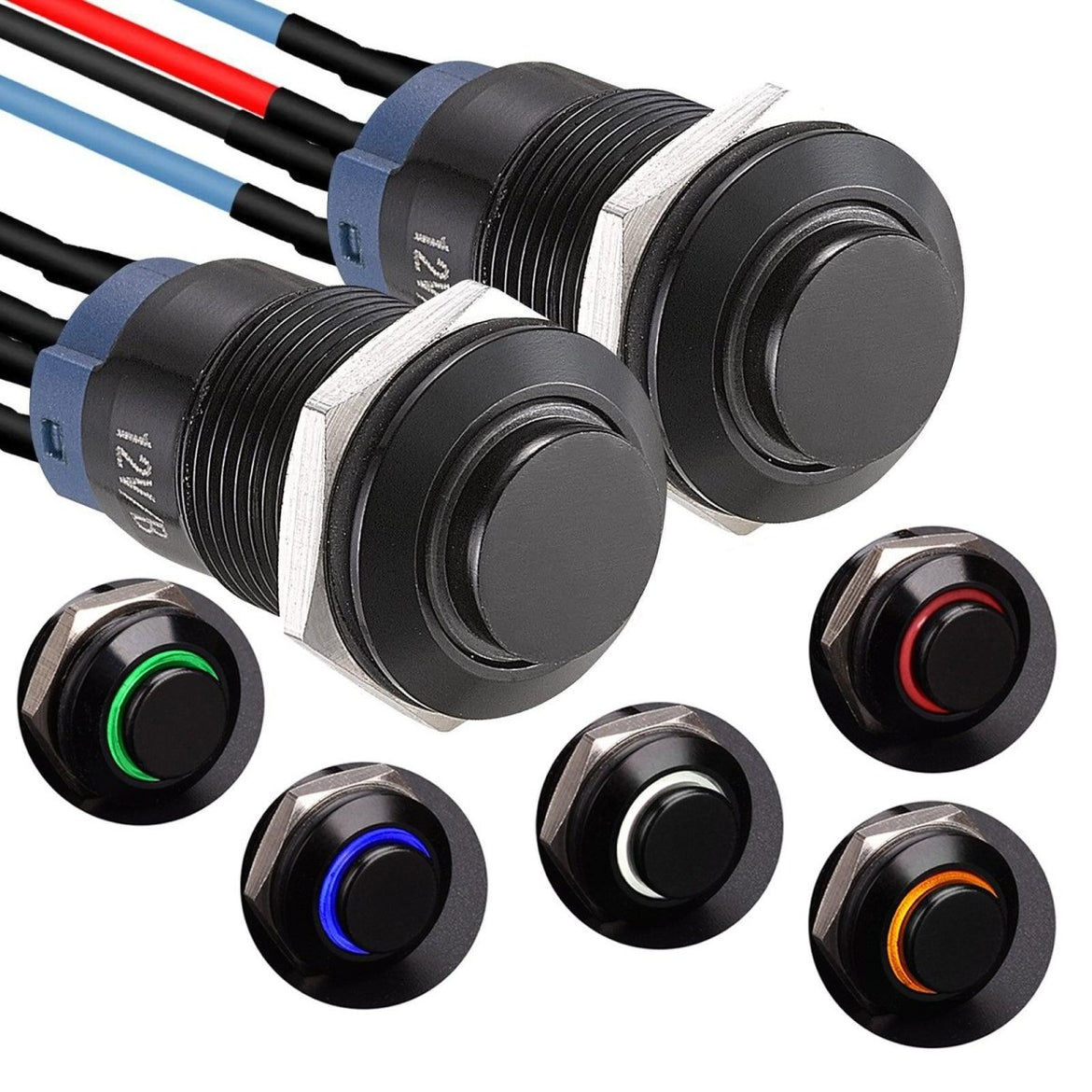
Normally Open (NO) vs Normally Closed (NC) Push Button Switch
Normally Open (NO) vs Normally Closed (NC) Push Button Switch: What’s the Difference?
Normally Open (NO) and Normally Closed (NC) push button switches differ fundamentally in their default states. NO switches remain open, preventing current flow until actuated, making them suitable for momentary controls. In contrast, NC switches maintain a closed state, allowing continuous current until activated, which is crucial for safety applications. The choice between these types significantly impacts circuit design and operational reliability. Further insights on their applications and selection factors can enhance understanding of their functional roles.
Key Takeaways
-
Normally Open (NO) switches remain open by default, allowing current flow only when actuated; Normally Closed (NC) switches stay closed, enabling continuous current flow until activated.
-
NO switches are ideal for momentary controls, while NC switches are vital for safety applications like emergency stops and interlocks.
-
The behavior of NO switches results in an open circuit until activated, whereas NC switches interrupt the circuit upon activation.
-
NO switches require user intervention for operation, while NC switches ensure immediate power shutdowns, enhancing safety in critical environments.
-
The “1NO 1NC” configuration combines both functionalities, offering versatility for applications needing both momentary activation and fail-safe operation.
What Is a Normally Open (NO) Push Button Switch?

A Normally Open (NO) push button switch is an electrical component designed to control the flow of current within a circuit. In its default state, the switch remains open, preventing current flow until actuated. This switch type is integral to various switch applications, including momentary controls for motors and lighting systems. Understanding its role in circuit design is essential for effective integration into electrical systems. The actuator mechanisms engage when pressed, allowing current to pass through the circuit momentarily. Adhering to safety standards, such as IEC 60947-5-1, ensures the reliability and safety of NO switches. Mastery of these electrical fundamentals is critical for designing safe and functional control systems in both industrial and consumer applications.
What Is a Normally Closed (NC) Push Button Switch?

Normally Closed (NC) push button switches serve as critical components in electrical circuits, maintaining a closed state that allows continuous current flow until activated. This design is integral for various switch applications, particularly in safety-critical environments where immediate interruption of power is necessary. In circuit design, NC switches utilize actuator mechanisms that physically separate contacts upon activation, effectively halting the current. Compliance with safety standards ensures reliable operation, making these electrical components essential in emergency stop systems and door interlocks. The predictability of NC switches enhances operational safety, as they default to a closed position, allowing uninterrupted function until an intentional action is taken. Thus, understanding NC switches is vital for effective electrical system design and implementation.
Normally Open vs Normally Closed: Key Differences at a Glance

Understanding the fundamental differences between Normally Open (NO) and Normally Closed (NC) push button switches is crucial for effective circuit design and application. NO switches utilize switch mechanisms that allow electrical contacts to remain apart until actuated, resulting in open circuit behavior by default. Conversely, NC switches maintain closed contacts, allowing continuous current flow until activated, thereby interrupting circuit behavior. This distinction has significant implications for safety compliance, particularly in emergency systems where immediate power shutdowns are essential. Testing methods, such as multimeter continuity checks, help verify the functionality of these switches, ensuring appropriate application in various industrial scenarios. Mastery of these key differences enhances the reliability and safety of electrical designs.
When to Use a Normally Open (NO) Push Button Switch
Normally Open (NO) push button switches are essential in applications that require momentary activation, such as machine start commands and motor control. Their functionality allows current to flow only when the switch is engaged, making them ideal for automotive and lighting applications, as well as signal triggering in devices like doorbells. The specific characteristics of NO switches facilitate user-initiated actions, enhancing control in various operational contexts.
Machine Start & Motor Control
In industrial settings, the use of a Normally Open (NO) push button switch is essential for initiating machine starts and controlling motor operations. This switch type remains in an open circuit state under normal conditions, allowing electrical control only when actuated. By employing push button mechanics, operators can trigger machine operation with a simple press, facilitating precise control over processes. The inherent circuit behavior of NO switches ensures that power flows exclusively during activation, minimizing unintended operations. This design is particularly advantageous in applications requiring momentary activation, such as motor start commands. Understanding these switch types is crucial for optimizing operational efficiency and safety within industrial environments.
Automotive & Lighting Applications
After exploring the role of Normally Open (NO) push button switches in machine start and motor control, their applicability extends into automotive and lighting systems. In automotive applications, NO switches are often utilized for functions such as starting engines, activating headlights, and controlling dashboard indicators. Their design allows for intuitive user interfaces, facilitating straightforward interaction. In lighting controls, NO switches are crucial for momentary activation, allowing lights to illuminate only when pressed, thereby enhancing energy efficiency. Effective circuit design incorporates these switch types to ensure reliability and responsiveness in both automotive and lighting contexts, providing users with the control necessary for safe and effective operation in various scenarios.
Doorbells & Signal Triggers
Doorbells and signal triggers rely on the functionality of Normally Open (NO) push button switches to enhance user interaction and responsiveness. These switches serve as crucial components in doorbell mechanisms, initiating signal activation only upon user engagement. In residential applications, the circuit design of NO switches allows for a seamless connection when the button is pressed, facilitating a straightforward user experience. This design ensures that the circuit remains open in its default state, preventing unintentional activation. The momentary nature of NO switches is particularly advantageous in scenarios where user feedback is essential, enabling clear indication of button response. Thus, the application of Normally Open switches significantly contributes to efficient and effective signaling in various residential systems.
When to Use a Normally Closed (NC) Push Button Switch
The Normally Closed (NC) push button switch is essential in applications requiring immediate power interruption, such as emergency stop buttons and safety interlock systems. Its default closed state ensures continuous current flow until activation, promoting safety by facilitating rapid shutdowns in fault conditions. Additionally, NC switches play a critical role in alarm systems, providing fail-safe mechanisms that enhance operational reliability.
Emergency Stop Buttons — Why NC Is the Standard
In industrial environments, emergency stop buttons are critical safety devices designed to halt machinery immediately in case of an emergency. Typically employing Normally Closed (NC) configurations, these buttons ensure that power is continuously supplied until activated, aligning with stringent emergency protocols. This design enhances switch reliability, as any failure or unintentional actuation results in an immediate interruption of current flow, thereby mitigating risks. Moreover, NC buttons facilitate effective circuit monitoring, allowing for real-time assessment of safety compliance. By ensuring swift and reliable shutdown of machinery, NC switches significantly contribute to operational efficiency, making them the standard choice in safety-critical applications. Their inherent fail-safe nature underscores their importance in safeguarding personnel and equipment within industrial settings.
Safety Interlock & Alarm Systems
A Normally Closed (NC) push button switch is essential in safety interlock and alarm systems, where immediate interruption of power is critical. These switches facilitate robust safety protocols by maintaining a closed circuit until actuation occurs, effectively serving as interlock mechanisms in various applications. When an NC switch is engaged, it triggers alarm systems and halts equipment operation, ensuring user safety and compliance with regulatory standards. In circuit design, the predictable behavior of NC switches enhances reliability, providing a fail-safe state that is crucial for emergency scenarios. This design choice ultimately improves user experience by minimizing the risk of accidental activation, thereby reinforcing operational integrity in safety-critical environments.
Fault Protection Circuits
When considering fault protection circuits, utilizing a Normally Closed (NC) push button switch is advantageous due to its inherent ability to maintain a closed circuit until an external force interrupts it. This characteristic is crucial in circuit design where fail safe mechanisms are paramount, particularly in safety-critical applications. NC switches ensure that power is cut off promptly during a fault condition, aligning with established electrical standards and safety compliance regulations. Their continuous current flow in the unactuated state provides a reliable foundation for systems requiring immediate shutdown features. By implementing NC switches, engineers can enhance fault protection, thereby mitigating risks associated with electrical failures and ensuring operational safety across various industrial environments.
What Does “1NO 1NC” Mean on a Push Button Switch?
The designation “1NO 1NC” on a push button switch indicates a configuration that includes one normally open (NO) contact and one normally closed (NC) contact. This dual functionality enhances versatility in various applications, enabling effective push button configurations that provide both momentary activation and fail-safe operation. Understanding switch wiring techniques is crucial; the wiring must accommodate both contact states to ensure proper circuit design principles are followed. Additionally, contact material choices impact longevity and reliability, particularly in demanding environments. An application suitability analysis reveals that such switches are ideal for scenarios requiring immediate power interruption alongside standard operational functions, thus ensuring safety and efficiency in industrial systems.
How to Choose Between NO and NC for Your Project
Selecting between Normally Open (NO) and Normally Closed (NC) push button switches requires a thorough understanding of the project’s operational requirements and safety considerations. NO applications typically include momentary controls, such as motor start commands and lighting activation, where user intervention is required. Conversely, NC applications are essential in safety-critical systems, such as emergency stop buttons, where an immediate power interruption is necessary. Key factors in switch selection involve evaluating circuit design, intended functionality, and safety features. The choice between NO and NC switches can significantly impact system reliability and user safety, necessitating a careful analysis of the intended application and operational context to ensure optimal performance and compliance with safety standards.
Frequently Asked Questions
Can NO and NC Switches Be Combined in One Unit?
Combining NO and NC switches in one unit enhances functionality across diverse applications. This integration necessitates careful wiring configurations and design considerations, ensuring efficient circuit integration while maintaining reliability and safety in various operational environments.
How Do Environmental Factors Affect Switch Performance?
Environmental factors significantly impact switch performance. Temperature effects can alter contact resistance, humidity impacts corrosion, dust accumulation may hinder actuation, while vibration resistance ensures operational integrity, demanding careful design considerations for reliability in varying conditions.
What Maintenance Is Required for NO and NC Switches?
Regular maintenance of NO and NC switches enhances switch lifespan. This includes monitoring contact wear, employing effective cleaning techniques, conducting routine testing methods, and adhering to proper installation tips to ensure optimal performance and reliability.
Are There Specific Brands Recommended for Reliability?
Certain brands excel in reliability, supported by user reviews and performance ratings. Comparing warranty options and adherence to industry standards further enhances their credibility, making them preferable choices for discerning professionals seeking dependable switch solutions.
How Do I Install a Push Button Switch Correctly?
To install a push button switch correctly, follow wiring techniques ensuring proper circuit integration, adhere to safety precautions, select optimal switch placement, and utilize troubleshooting tips to verify functionality and prevent operational failures.